UK Baptist Church Website Transformed into Online Casino by Hackers: Roulette Tables and Slots Replace Religious Content

The Unexpected Digital Intrusion
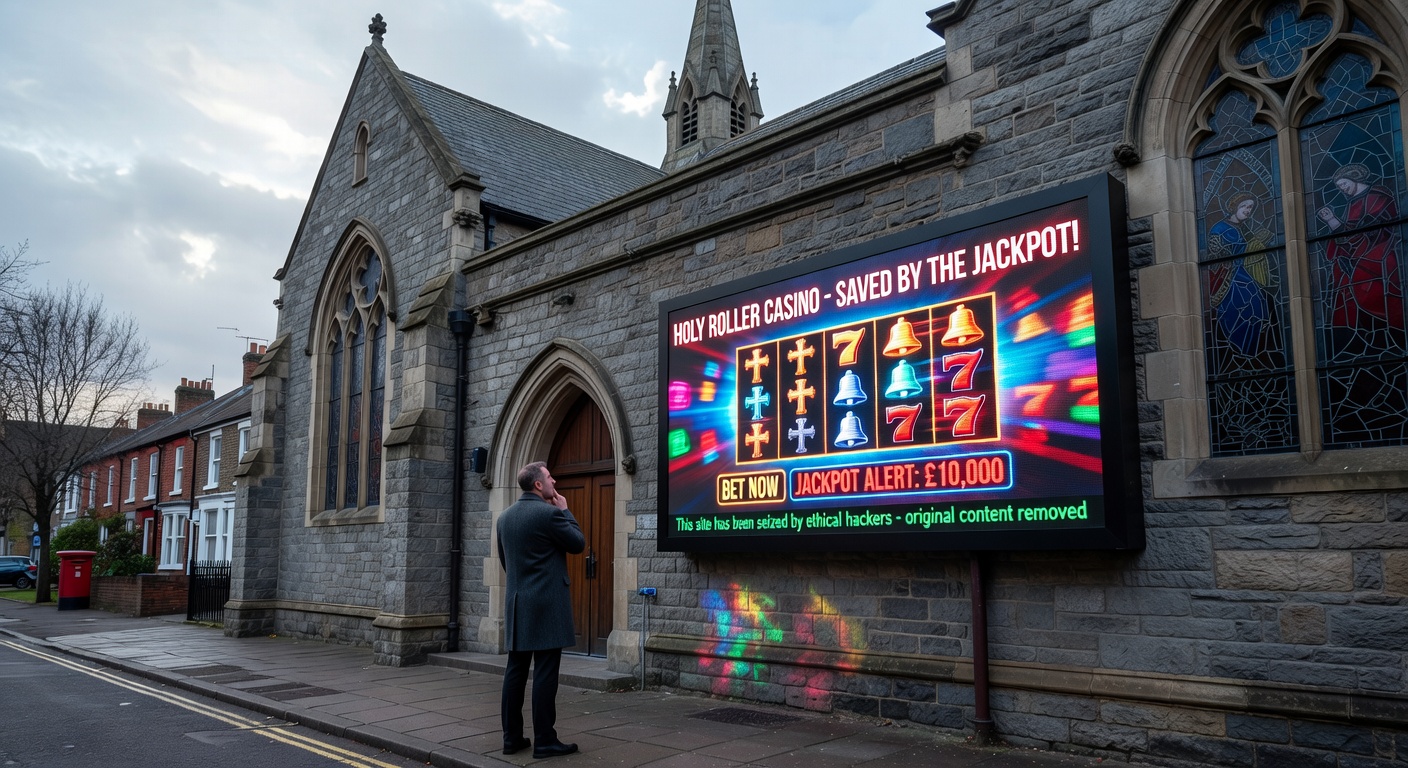
Parishioners of a Baptist church in the UK logged onto their familiar website expecting sermons, event schedules, and spiritual resources, but instead encountered flashing virtual roulette tables, spinning digital slot machines, and bold gambling promotions; this startling transformation occurred when hackers defaced the site, turning a place of worship's online presence into a mock online casino. The incident, reported in late March 2026 by The Telegraph, unfolded just weeks ago, leaving church members bewildered as they navigated promotions for bets and wins rather than Bible studies or prayer requests. Observers note how such defacements exploit basic vulnerabilities, redirecting trusted domains to illicit content while the original site's structure lingers in the background.
What's interesting is the precision of the hack; attackers didn't just post a crude message or ransomware demand, but fully repurposed the homepage with interactive gambling elements, complete with animated wheels and paytable displays that mimicked legitimate casino interfaces. According to details from The Telegraph, the church, whose identity remains partially shielded in initial reports to protect ongoing investigations, serves a local community in England, relying on the website for daily operations like online giving and live stream links. Now, in early April 2026, as the site undergoes restoration, the event underscores persistent cybersecurity gaps for small religious organizations across the UK.
And yet, the timing adds another layer; with Easter services wrapping up and spring community events ramping up, the defacement disrupted preparations, forcing staff to scramble for alternative communication channels while experts scramble to trace the perpetrators. People who've studied these attacks point out that hackers often choose low-profile targets like churches because they anticipate minimal defenses, allowing quick deployment of gambling-themed malware or redirects.
Details of the Defacement and Technical Tactics
Hackers gained access through what appears to be an unpatched content management system vulnerability, a common entry point for website takeovers; once inside, they injected code for casino simulations, overlaying the church's header with neon-lit roulette layouts featuring red-and-black wheels, betting grids, and chip animations, while slot machine reels promised jackpots amid flashing lights and sound cues (simulated via HTML5 elements). Parishioners reported seeing calls-to-action like "Spin to Win Big" where donation buttons once stood, and virtual tables offered demo plays on European roulette variants complete with realistic physics and payout tables.
Turns out, the attackers embedded affiliate links to offshore gambling sites, potentially earning commissions from any clicks or sign-ups originating from the church domain; this monetization twist differentiates the hack from mere vandalism, aligning it with broader cybercrime trends where defaced sites serve as traffic funnels. Church administrators noticed the change during routine checks, prompting an immediate takedown, but not before screenshots circulated among members and hit social media, amplifying the embarrassment.
Experts examining similar tactics have observed how such operations use automated scripts to clone casino UIs from public demos, swapping in the victim's branding for ironic effect; here, remnants of cross motifs and hymn lyrics peeked through the gambling overlay, creating a jarring juxtaposition that one cybersecurity analyst described as "digital desecration" in preliminary reviews. Data from global incident trackers reveals that website defacements spiked 15% in early 2026, with nonprofit sectors hit hardest due to outdated plugins and shared hosting setups.
Church Response and Immediate Aftermath
Church leaders acted swiftly upon discovery, isolating the server and enlisting a local IT firm for cleanup; by April 2026, the site was back online with basic pages restored, though full functionality like e-commerce for tithes remains under review. In statements to The Telegraph, representatives expressed shock but emphasized community resilience, urging members to avoid the site temporarily and use email or phone for updates. Volunteers stepped in to monitor traffic, noting unusual spikes from gambling-curious visitors drawn by viral shares.
But here's the thing: the incident prompted a review of digital protocols, with the church now implementing two-factor authentication and regular backups; parishioners, many unfamiliar with cyber threats, received guidance on spotting phishing attempts that might exploit the event's publicity. Observers who've tracked religious cyber incidents highlight how such events foster caution, leading to workshops on secure website management.
So, while the hackers remain at large, UK police cyber units have opened an investigation, coordinating with hosting providers to analyze logs; preliminary findings suggest the attack originated from Eastern Europe, based on IP traces, though attribution proves challenging without international cooperation.
Broadening Cybersecurity Context for UK Religious Groups
Religious organizations in the UK, numbering over 40,000 registered charities, often operate on shoestring budgets with volunteer-led IT, making them prime targets for opportunistic hacks; statistics from the National Cyber Security Centre indicate that small nonprofits face 2.5 times higher breach risks than average due to legacy software and infrequent updates. This Baptist church case exemplifies the pattern, where a simple SQL injection or weak password sufficed for full control.
What's significant is the gambling theme's prevalence in defacements; attackers leverage high-engagement content like roulette and slots because it draws clicks and prolongs sessions, boosting ad revenue or affiliate payouts. Figures from the Cybersecurity and Infrastructure Security Agency in the US, which tracks global trends, show a 20% uptick in casino-themed website compromises since 2025, often targeting trusted domains for credibility.
Those who've analyzed UK faith-based cybersecurity note that only 30% of churches employ basic firewalls, per recent surveys, leaving domains ripe for such repurposing; post-hack, this incident has sparked discussions in denominational networks, with Baptist unions sharing free vulnerability scanners and training modules. And although no data breaches of personal info occurred here, the reputational hit lingers, as search engines indexed the casino version briefly, tainting organic traffic.
Now, in April 2026, as warmer weather brings outdoor gatherings, churches nationwide reassess online presences; experts recommend managed WordPress hosting with auto-updates, alongside employee training on recognizing anomalous logins. One study from EU researchers found that proactive patching reduces defacement odds by 70%, a stat resonating strongly in this context.
Take the case of this church: pre-hack audits might have flagged the CMS flaw, but resource constraints prevailed until the virtual slots spun into view; parishioners, now more vigilant, report fewer scam attempts, suggesting a silver lining in heightened awareness.
Longer-Term Implications and Lessons Learned
Incidents like this ripple outward, prompting regulatory nudges from bodies overseeing charity digital compliance; while no fines apply directly, the event fuels calls for mandatory cyber hygiene standards in the nonprofit sector. Researchers tracking cybercrime evolution point to state-sponsored actors occasionally using defacements for propaganda, though this appears profit-driven, given the casino pivot.
Yet, the human element stands out: church staff, juggling ministry and maintenance, discovered the hack during a coffee break review, highlighting how everyday diligence averts worse outcomes. Data indicates recovery costs average £5,000 for small sites, a burden eased here by community donations earmarked for security upgrades.
It's noteworthy that gambling defacements carry legal wrinkles under UK computer misuse laws, classifying them as unauthorized modifications; ongoing probes could yield arrests if trails lead to identifiable groups.
Conclusion
This hacker-driven casino takeover of a Baptist church website serves as a stark reminder of digital fragility for UK religious communities, where roulette wheels and slot reels supplanted sacred content in a matter of hours; as April 2026 progresses, restoration efforts continue alongside broader safeguards, ensuring parishioners access faith resources without unwelcome bets. Observers anticipate fewer such surprises as awareness grows, with tools and training bridging the gap between spiritual missions and modern cyber realities.